

Applying for an online loan in the Philippines can feel instant at first, then suddenly stall for hours or even days. Many borrowers assume a delay automatically means rejection, but that is not always true. Most delays happen because digital lenders use layered verification systems, fraud detection tools, manual review queues, and payout validation checks before releasing funds.
Summary:
An instant cash loan delayed Philippines case usually happens when fintech systems detect identity inconsistencies, duplicate applications, device irregularities, failed bank transfers, or incomplete verification records. Delays can also occur during maintenance downtime, heavy application surges, or manual review escalation. Borrowers who use different phone numbers, mismatch their ID with e-wallet details, or repeatedly submit applications often trigger risk flags. Fixing delays typically requires correcting personal information, waiting for review completion, avoiding duplicate submissions, and ensuring payout accounts match verified identity records. Responsible reapplication timing and accurate KYC information improve approval speed significantly.
Why “Instant” Loans Sometimes Stop Moving 🚦
Many borrowers think digital lenders only use automatic approvals. In reality, most licensed lending apps in the Philippines combine:
- Automated scoring systems
- Fraud detection systems
- KYC verification layers
- Manual compliance review
- Disbursement validation systems
- E-wallet or bank transfer confirmation checks
Even if a platform advertises “5-minute approval,” the backend process may involve multiple systems communicating with each other before money is released.
A borrower may receive:
- “Pending review”
- “Processing”
- “Verification ongoing”
- “Payout queued”
- “Manual checking”
- “Disbursement failed”
These messages often indicate operational friction rather than outright denial.
For users researching instant cash loan Philippines services, this distinction matters because approval and release are not always the same stage.
The Most Common Reasons Loan Applications Get Delayed
Manual Review Triggers Are More Common Than Borrowers Think
Automated systems are designed to approve low-risk applications quickly. But once a system detects anything unusual, the application moves into a verification review queue.
Common manual review triggers include:
- Blurry ID uploads
- Inconsistent address details
- Multiple devices used during application
- Frequent application edits
- Mismatch between selfie and ID image
- Low-quality camera capture
- VPN or proxy detection
- Suspicious typing or behavior patterns
Many fintech lenders also monitor behavioral risk indicators such as:
- Extremely fast form completion
- Repeated retries within minutes
- Copy-pasted information patterns
- Multiple failed OTP attempts
These behaviors may resemble fraud attempts even when the borrower is legitimate.
Duplicate Account Flags Can Freeze Processing
One of the biggest hidden causes of delays involves duplicate borrower identity detection.
A borrower may unintentionally trigger a duplicate account flag by:
- Using two mobile numbers
- Registering multiple email addresses
- Applying through different devices
- Reapplying before previous applications close
- Creating a new account after forgetting login credentials
Modern lending systems often compare:
- Device fingerprints
- SIM registration data
- Government ID numbers
- Facial recognition patterns
- GPS behavior
- Banking details
If the system detects overlap, approval may pause automatically until a human reviewer checks the account.
This is especially common among borrowers attempting fast reapplication after rejection.
Why Reapplying Too Quickly Can Make Things Worse
Multiple Applications Can Trigger Suspicious Behavior Detection
Many users panic after seeing “pending” status for several hours and immediately submit another application.
This often causes:
- Duplicate borrower identity alerts
- Queue resets
- Additional manual review
- Higher fraud-risk scoring
- Temporary account restrictions
Instead of speeding up approval, repeated submissions usually slow everything down.
Recommended Waiting Time Before Reapplying
While policies vary between lenders, many fintech systems need time to:
- Complete database synchronization
- Verify payout account ownership
- Review flagged information
- Resolve failed transfer attempts
A safer approach is:
- Wait for official rejection confirmation
- Correct the identified issue first
- Reapply only after account status resets
- Avoid changing key identity details unnecessarily
This is one reason many platforms emphasize accurate instant cash loan requirements during onboarding.
Identity Mismatches That Quietly Delay Loan Releases
E-Wallet Name and ID Name Problems
One of the most overlooked payout issues in the Philippines involves mismatched names between:
- Government ID
- E-wallet account
- Bank account
- Loan application profile
For example:
- ID says “Maria Santos Cruz”
- E-wallet says “Maria Cruz”
- Loan form says “Maria S. Cruz”
Even minor inconsistencies may trigger payout verification delays.
Many lenders now use automated name-matching systems to reduce fraud and account takeovers.
Common Verification Mismatch Problems
| Verification Area | Typical Delay Trigger |
|---|---|
| Government ID | Cropped or expired ID |
| Selfie verification | Poor lighting or face obstruction |
| Mobile number | Recently changed SIM |
| E-wallet account | Different registered name |
| Address | Incomplete barangay information |
| Employment details | Unverifiable employer |
| Banking information | Closed or inactive account |
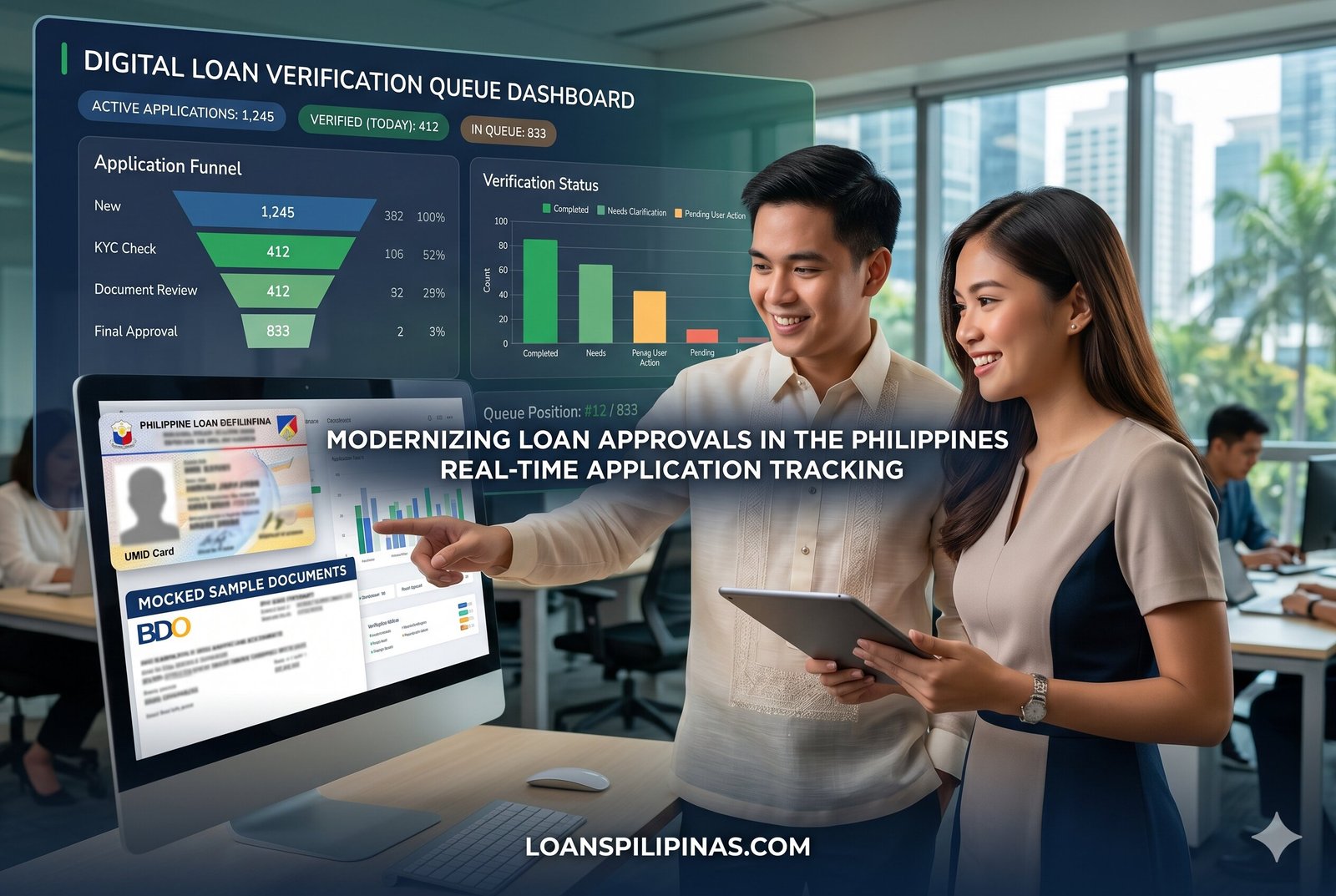
Philippine Digital Loan Verification Queue Dashboard
Device Inconsistency Can Trigger Risk Checks 📱
Why Switching Phones During Application Creates Problems
Some borrowers start an application on one device and finish on another. Others submit documents using borrowed phones.
Fraud prevention systems may interpret this as suspicious activity.
Device inconsistency checks can include:
- Browser fingerprint changes
- Operating system mismatch
- IP address changes
- Sudden location shifts
- Emulator detection
- Rooted device warnings
This does not guarantee rejection, but it frequently pushes applications into manual review queues.
Borrowers Using Different Phone Numbers Face Longer Verification
A very common operational issue occurs when:
- OTP verification uses one number
- E-wallet uses another number
- Existing borrower records contain older numbers
Fintech systems heavily rely on mobile identity consistency because Philippine digital lending depends strongly on SIM-linked verification.
Borrowers who frequently change SIM cards may experience repeated verification delays.
Delayed Payout Mechanics After Approval 💸
Approval Does Not Always Mean Funds Are Already Sent
Many borrowers receive approval notifications but still wait hours for disbursement.
This usually happens because:
- Banking rails operate in batches
- E-wallet APIs experience congestion
- Transfer providers face downtime
- Risk reviews continue post-approval
- Manual payout release still needs confirmation
In practice, there are multiple stages:
- Application approval
- Loan contract confirmation
- Fund disbursement instruction
- Banking or e-wallet processing
- Recipient account confirmation
A delay at any stage can hold the payout.
Failed Bank Transfer Systems Are Increasingly Common
Digital lending growth in the Philippines has increased dependence on:
- InstaPay
- PESONet
- E-wallet integrations
- Third-party payment gateways
During traffic spikes or maintenance periods, failed bank transfer systems may:
- Return transactions to queue
- Delay confirmation notices
- Require manual retry processing
This explains why some users receive:
- “Approved but not credited”
- “Disbursement processing”
- “Transfer unsuccessful”
without immediate rejection.
Maintenance Downtime Often Causes Silent Delays
Midnight Processing Windows Affect Some Lenders
Some lenders conduct:
- System upgrades
- Fraud model recalibration
- Payment gateway maintenance
- Database synchronization
during low-traffic hours.
Applications submitted during these windows may remain stuck temporarily.
Common signs include:
- OTP delays
- Frozen status pages
- Duplicate SMS notifications
- Delayed approval emails
- Incomplete application screens
Weekend and Holiday Queues Can Become Congested
Despite 24/7 marketing claims, manual verification teams may operate with reduced staffing during:
- Public holidays
- Weekends
- Payday traffic surges
- Major sales events
This affects realistic same day release expectations for many borrowers.
Why Location Sometimes Affects Approval Speed
Geographic Risk Models Exist
Some fintech systems evaluate applications partly based on:
- Device geolocation
- Regional fraud frequency
- Connectivity reliability
- Delivery risk patterns
This does not mean certain provinces are automatically rejected. However, applications from locations with:
- inconsistent connectivity,
- frequent identity fraud incidents,
- or high repayment default clustering
may undergo longer manual review.
Overseas IP Addresses Create Verification Delays
A borrower physically located abroad while applying using Philippine credentials may trigger:
- account takeover alerts,
- unusual login flags,
- or identity verification escalation.
This frequently affects OFWs applying while overseas.
The Hidden Role of Fraud Detection Systems 🔍
Modern Lending Apps Use Behavioral Analysis
Many borrowers assume lenders only verify IDs. In reality, fintech platforms increasingly use behavioral analytics.
Fraud detection systems may monitor:
- Typing speed
- Screen interaction patterns
- Camera permission behavior
- Device trust scores
- Geolocation consistency
- Historical borrower patterns
Applications that resemble known fraud behavior can enter deeper review queues automatically.
Why Legitimate Borrowers Still Get Flagged
False positives happen regularly because fraud prevention systems prioritize risk reduction.
Borrowers may unintentionally trigger alerts by:
- Using public Wi-Fi
- Copy-pasting employer information
- Uploading edited screenshots
- Applying repeatedly within short periods
- Using shared devices
This is why practicing safe instant lending behavior matters even before submission.
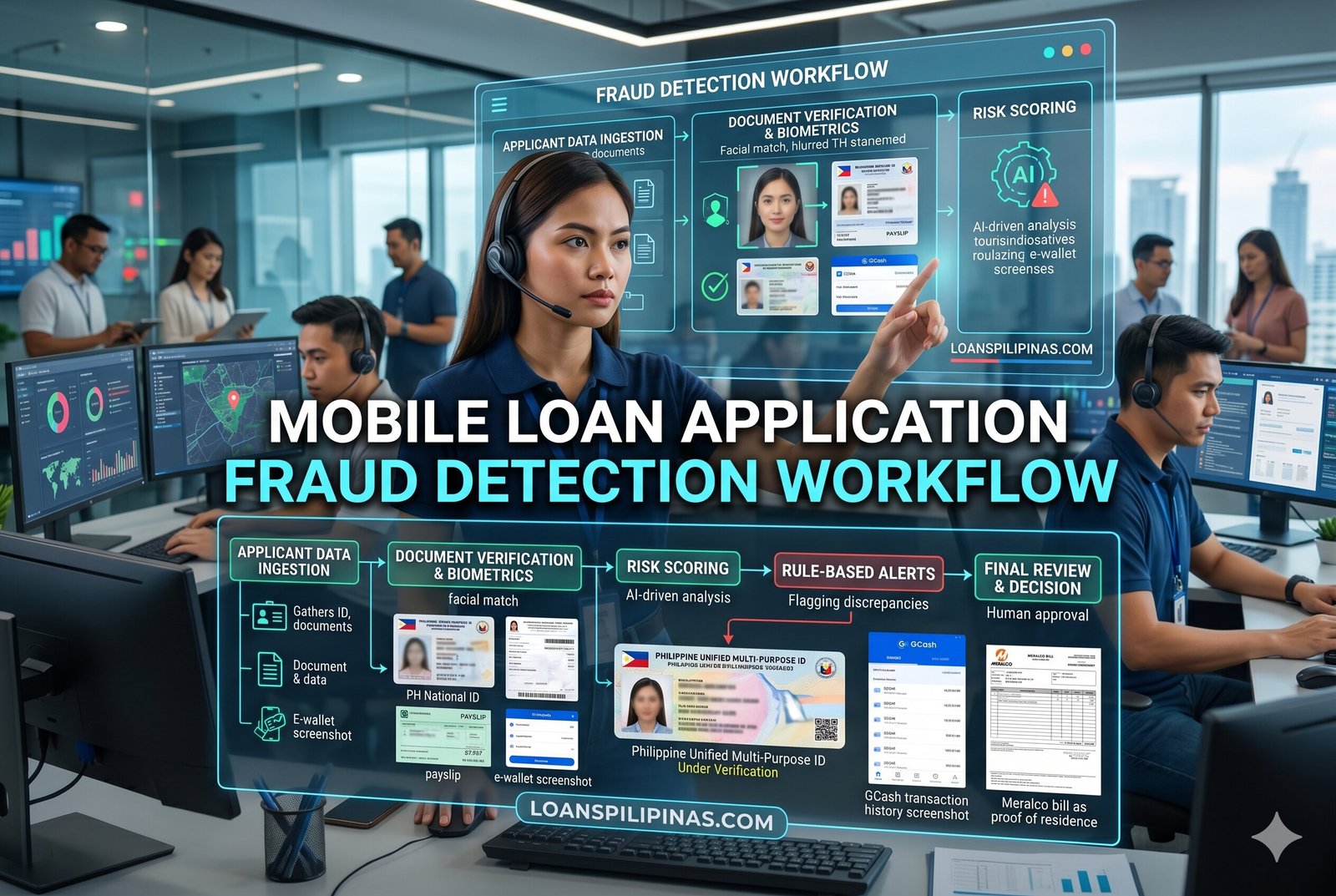
Mobile Loan Application Fraud Detection Workflow
How To Fix a Delayed Loan Application
Step 1: Stop Submitting Multiple Applications
Do not:
- Spam the submit button
- Open duplicate accounts
- Switch devices repeatedly
- Use multiple identities
This usually worsens delays.
Step 2: Review All Identity Details Carefully
Check:
- Full legal name consistency
- Birthdate accuracy
- ID expiration status
- E-wallet spelling
- Mobile number ownership
Tiny mismatches can create major delays.
Step 3: Verify Your Payout Channel
Make sure:
- Your bank account is active
- Your e-wallet is fully verified
- Account names match your ID
- Daily wallet limits are not exceeded
Some delays happen after approval simply because the receiving account cannot accept funds.
Step 4: Wait for the Review Window to Finish
Many lenders publish estimated review times, but actual queues vary depending on:
- application volume,
- fraud activity,
- staffing,
- and payout system health.
Immediately reapplying rarely helps.
Borrowers Most Likely To Experience Delays
Freelancers and Gig Workers
Applicants with:
- irregular income,
- multiple payment sources,
- or informal work arrangements
often face longer verification because automated systems struggle to classify earnings consistency.
Newly Employed Borrowers
Recent employment changes may delay employer verification.
This happens especially when:
- HR contact numbers cannot be validated,
- company emails are missing,
- or payroll history is limited.
First-Time Borrowers
Repeat borrowers with good repayment history usually move faster through risk systems.
First-time users lack:
- behavioral repayment records,
- platform trust history,
- and established device patterns.
Quick Answers to Common Delay Questions
Why is my application still pending?
Your application may still be under:
- manual review,
- identity verification,
- payout validation,
- or fraud screening.
Pending status does not always mean rejection.
Can multiple applications trigger delays?
Yes. Duplicate submissions commonly trigger suspicious behavior detection and manual review escalation.
Does location affect approval speed?
Sometimes. Risk systems may apply additional verification depending on device location, connectivity patterns, or fraud indicators.
Should I reapply immediately after rejection?
Usually no. Correcting the original issue first is safer than immediate resubmission.
Practical Ways To Reduce Approval Delays
Before Applying
Prepare:
- Valid government ID
- Stable internet connection
- Verified e-wallet
- Matching mobile number
- Accurate employment details
Avoid:
- Borrowed devices
- Public Wi-Fi
- Screenshot editing
- Frequent app switching
During Application
Use:
- Good lighting for selfies
- Consistent information
- Clear document images
- Active contact numbers
Complete the application calmly rather than rushing through fields.
After Submission
Do:
- Monitor SMS and email notices
- Respond to verification calls
- Avoid duplicate applications
Do not:
- Spam customer support repeatedly
- Submit altered documents
- Change identity details unnecessarily
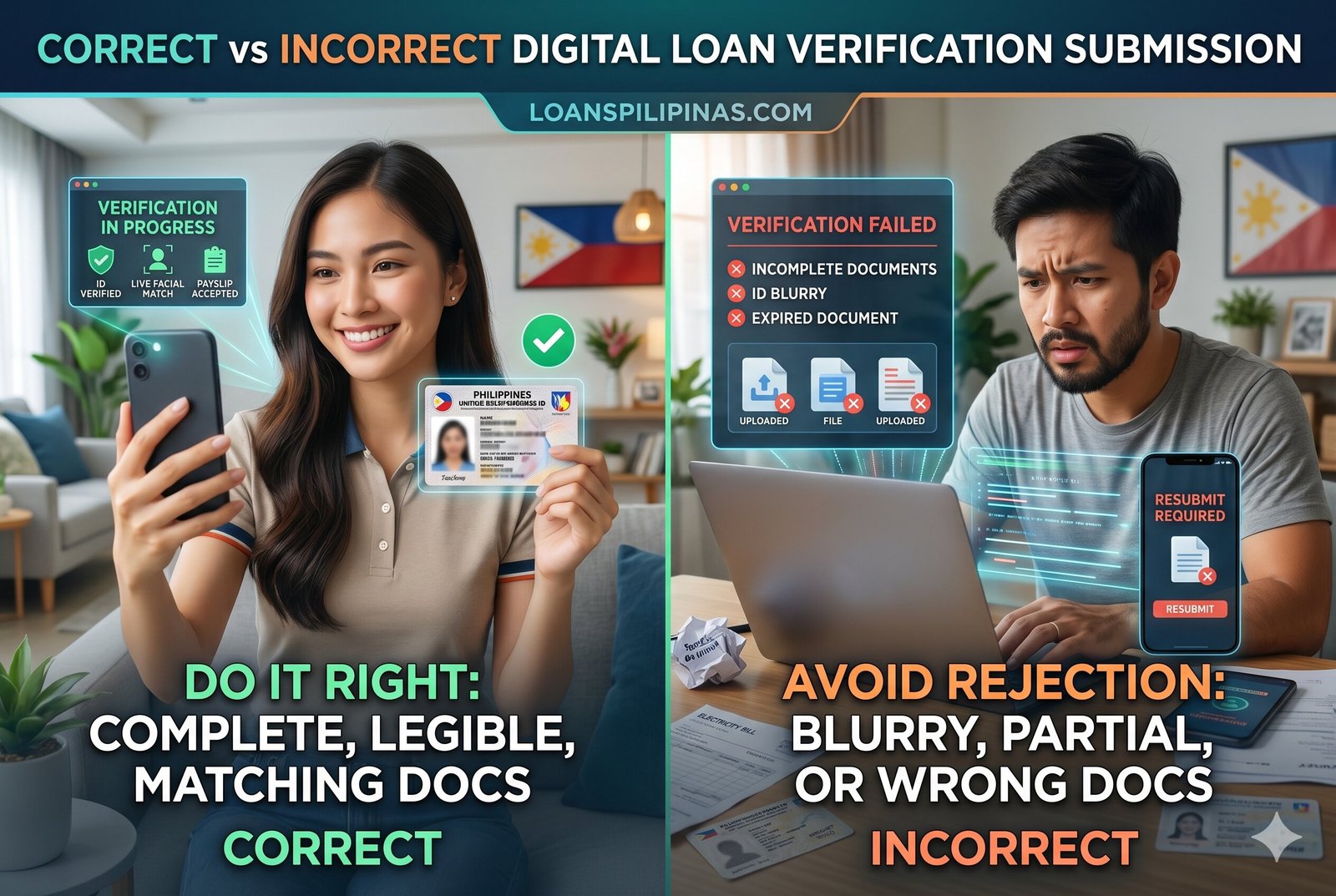
Correct vs Incorrect Digital Loan Verification Submission
Why Borrower Psychology Matters During Delays
Digital lending delays create anxiety because borrowers usually apply during urgent financial pressure.
Common emotional reactions include:
- panic reapplication,
- misinformation from social media groups,
- repeated app downloads,
- risky borrowing decisions,
- and falling into unlicensed lending traps.
Borrowers who stay patient and correct operational issues generally have better outcomes than those aggressively resubmitting applications across multiple platforms within minutes.
Responsible borrowing also means recognizing when delays may indicate:
- insufficient verification readiness,
- identity inconsistencies,
- or financial overextension.
BSP-Aligned Verification Expectations in Philippine Fintech
Many digital lenders operating legally in the Philippines follow stricter identity verification expectations influenced by:
- anti-fraud compliance,
- anti-money laundering practices,
- and customer verification obligations.
These processes are not designed solely to slow borrowers down. They also help reduce:
- identity theft,
- synthetic borrower fraud,
- account takeovers,
- and unauthorized payouts.
Borrowers should prioritize legitimate lenders registered with relevant Philippine authorities instead of bypassing verification through suspicious shortcuts.
Conclusion
An instant cash loan delayed Philippines issue is often caused by verification friction rather than automatic rejection. Fraud detection systems, duplicate account flags, payout validation checks, device inconsistencies, and manual review queues all play major roles in modern Philippine digital lending workflows.
Borrowers improve approval speed by maintaining consistent identity records, using verified payout channels, avoiding duplicate submissions, and practicing responsible digital borrowing behavior. Delays become far less stressful when applicants recognize how fintech risk systems actually operate behind the scenes.
Responsible borrowing is not only about getting approved quickly. It also involves protecting your identity, using legitimate lenders, and avoiding rushed decisions during financial pressure.
