
Borrowing money online in the Philippines has become faster, more accessible, and more dangerous at the same time. While many borrowers search for a safe instant cash loan Philippines option during emergencies, scammers and abusive lending operators often target people who are stressed, under pressure, or financially vulnerable.
Legitimate digital lenders now use automated KYC checks, e-wallet disbursement systems, device verification, and risk scoring tools to approve applications within minutes. However, unsafe loan apps may misuse borrower data, hide excessive fees, pressure users into rollover borrowing, or threaten borrowers through illegal collection tactics.
This article explains how to identify trustworthy lenders, verify SEC legitimacy, recognize scam warning signs, protect your personal data, and borrow responsibly without exposing yourself to privacy abuse or predatory lending behavior.
Summary
A safe instant cash loan Philippines provider should have transparent repayment terms, visible SEC registration, lawful data privacy practices, realistic approval timelines, and professional collection behavior. Borrowers should avoid loan apps that demand upfront fees, access excessive phone permissions, promise guaranteed approvals, or use harassment threats. Legitimate lenders normally require identity verification, selfie matching, mobile number authentication, and repayment disclosure before disbursement. Checking SEC advisories, reviewing privacy policies, and verifying customer support channels can reduce scam risks and help borrowers choose safer digital lending platforms during financial emergencies.
Why Trust Matters More Than Fast Approval ⚠️
Many Filipinos apply for online loans during stressful moments:
- Medical expenses
- Delayed salary
- Utility disconnection notices
- Tuition deadlines
- Emergency transportation costs
- Business cash flow gaps
When urgency increases, borrowers often ignore warning signs just to receive funds quickly. This creates opportunities for fraudulent operators and abusive lenders.
A trustworthy lender does not rely on panic-based decision-making. Instead, legitimate fintech platforms focus on:
- Clear disclosure
- Responsible onboarding
- Identity verification
- Transparent repayment schedules
- Proper borrower consent
- Professional customer support
Safe borrowing is not only about getting approved quickly. It is about avoiding financial harm after the loan is released.
What Makes an Instant Loan App Safe in the Philippines?
Legitimate Lenders Normally Show Regulatory Transparency
One of the first things borrowers should check is whether the lender appears in records connected to the Securities and Exchange Commission or publishes legitimate registration details.
A credible lending platform usually provides:
- SEC registration information
- Corporate name
- Customer support details
- Official privacy policy
- Terms and conditions
- Clear interest and fee disclosures
Unsafe apps often hide ownership details or operate only through anonymous social media pages and SMS campaigns.
Borrowers should also look for operational consistency. Legitimate apps usually maintain:
- Stable websites
- Functional support channels
- Secure HTTPS encryption
- Verified app store presence
- Consistent branding across platforms
Responsible Verification Is Actually a Good Sign
Some borrowers assume easier approval always means safer or better borrowing. That is not true.
Legitimate digital lenders commonly request:
- Government-issued ID
- Selfie verification
- Mobile OTP confirmation
- Employment or income details
- E-wallet ownership verification
- Bank account validation
These checks help prevent identity fraud and synthetic account abuse.
If a lender claims “100% guaranteed approval with no verification,” that can be a major red flag.
Real fintech risk systems evaluate:
- Device consistency
- Identity matching
- Repayment probability
- Fraud indicators
- Duplicate applications
- Behavioral anomalies
This is also why some borrowers experience delays discussed in articles about why instant loans get delayed during additional verification checks.
Common Instant Loan Scam Warning Signs 🚨
Fake Approval Messages and Advance Fee Traps
One common scam involves fake approval SMS messages.
Borrowers receive texts claiming:
“Your loan is approved. Pay processing fee first.”
Legitimate lenders rarely ask for advance release payments before disbursement.
Scam operators may request:
- “Insurance fee”
- “Verification payment”
- “Unlocking charge”
- “Security deposit”
- “Activation fee”
After payment, communication usually disappears.
A legitimate lender deducts authorized charges from the loan proceeds or clearly includes them in the repayment schedule.
Unrealistic Approval Promises
Be cautious when lenders advertise:
- Guaranteed approval regardless of history
- No verification at all
- Unlimited borrowing instantly
- Extremely high loan amounts for first-time users
Actual digital lending systems use layered risk models.
Even apps promoting instant approval without payslip verification still normally analyze:
- Mobile activity
- ID consistency
- repayment behavior
- banking patterns
- alternative data signals
No responsible lender can truthfully approve every applicant automatically.
Excessive App Permissions
One of the most serious borrower safety issues involves privacy abuse risks.
Some unsafe apps request access to:
- Contact lists
- Photos
- Messages
- Call logs
- File storage
- GPS tracking beyond operational needs
This creates risk if the lender later uses borrower contacts for harassment.
Responsible apps limit permissions to operationally necessary functions such as:
- Camera access for ID upload
- SMS OTP reading
- Device fraud detection
Borrowers should carefully review permission requests before installation.
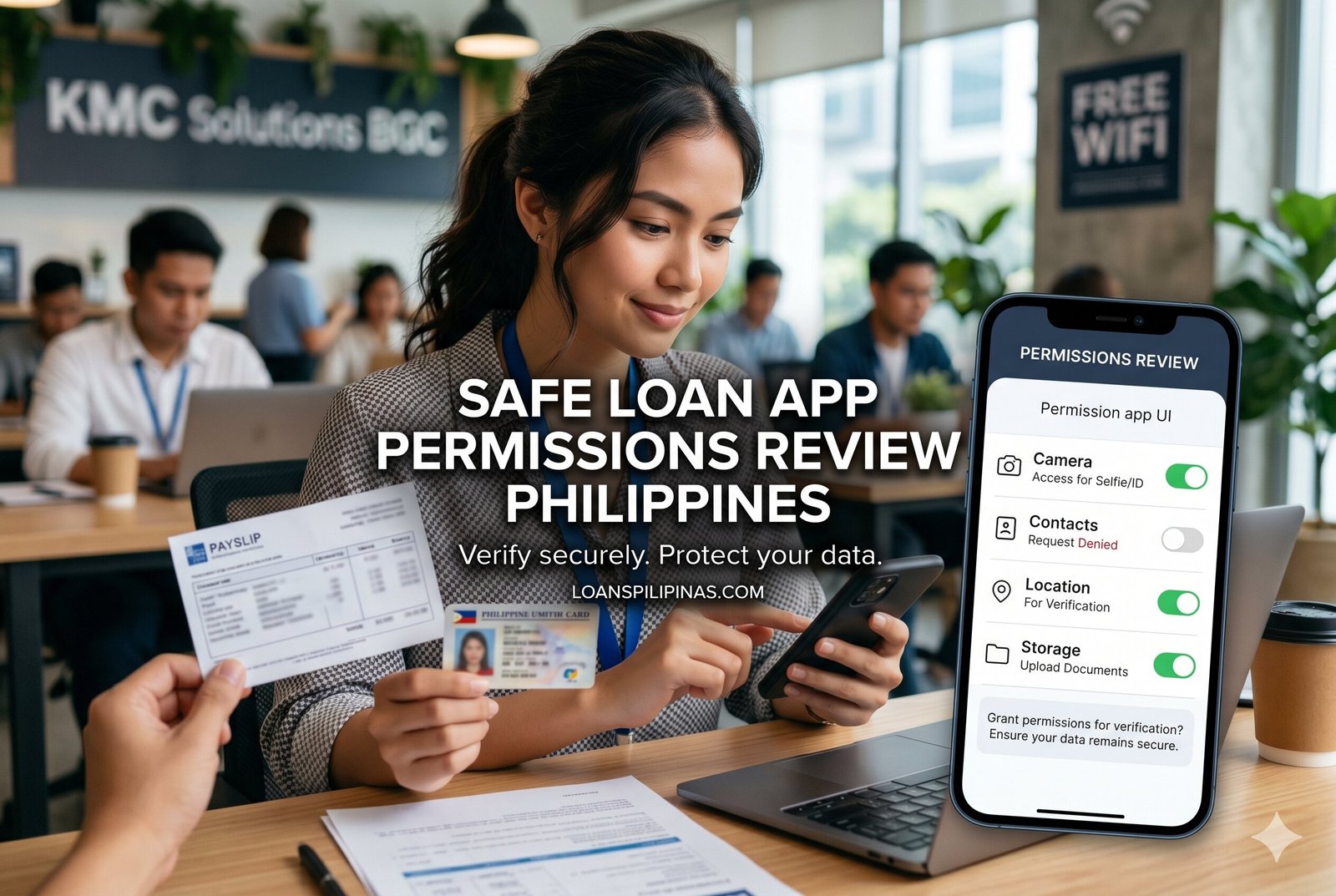
Safe Loan App Permission Review Philippines
How Legitimate Loan Verification Actually Works
Identity Verification and KYC Checks
Modern Philippine lending platforms often follow BSP-aligned onboarding expectations and digital KYC procedures.
The process may include:
- ID capture
- OCR data extraction
- Facial liveness detection
- Selfie comparison
- Device fingerprinting
- Mobile number verification
Some systems automatically reject:
- Blurry IDs
- Edited screenshots
- Cropped documents
- Mismatched selfies
- Recycled application photos
This is normal fraud prevention behavior, not necessarily discrimination.
Employment and Income Validation
Legitimate lenders assess repayment ability differently depending on borrower type.
Employed Applicants
Typical verification signals:
- Payroll consistency
- Employer details
- Payslip patterns
- Bank inflows
Freelancers and Gig Workers
Alternative validation may include:
- E-wallet transaction activity
- Platform payouts
- Client invoices
- Digital banking history
Self-Employed Borrowers
Some lenders evaluate:
- Business cash flow
- Inventory movement
- Merchant wallet activity
- Bank statement consistency
This is why some borrowers searching for same day instant release expectations still experience manual review delays when submitted data appears inconsistent.
Hidden Fee Structures That Borrowers Miss 💸
Processing Charges vs Illegal Fee Manipulation
Not all fees are scams. Legitimate lenders may charge:
- Processing fees
- Service charges
- Late payment penalties
- Convenience fees
The problem begins when lenders intentionally obscure costs.
Warning signs include:
- Missing amortization breakdowns
- Confusing repayment schedules
- Undefined penalties
- Daily compounding without disclosure
- Rollover pressure
Borrowers should always check:
- Net disbursed amount
- Total repayment
- Due date structure
- Extension penalties
- Late fee mechanics
The Dangerous Rollover Borrowing Cycle
Some abusive operators pressure borrowers to:
- Extend loans repeatedly
- Borrow from another app
- Pay only penalties first
- Refinance continuously
This creates debt traps.
A responsible lender encourages:
- Full repayment planning
- Sustainable borrowing
- Transparent due dates
- Predictable repayment behavior
If customer support aggressively pushes renewals before due dates, caution is necessary.
Harassment Complaints and Illegal Collection Behavior
What Legitimate Collection Practices Look Like
Professional collection teams usually:
- Send repayment reminders
- Call borrowers respectfully
- Offer structured payment discussions
- Provide documented notices
Illegal practices may involve:
- Threatening arrest
- Contacting unrelated persons
- Public shaming
- Edited social media images
- Workplace harassment
- Aggressive intimidation
Borrowers should know that unpaid debt alone does not automatically lead to imprisonment.
Can Lenders Access Contacts Legally?
This is one of the most searched concerns among Filipino borrowers.
Accessing borrower contacts without proper lawful basis or abusing contact data for harassment may violate privacy expectations connected to the National Privacy Commission and Philippine data privacy rules.
Responsible lenders explain:
- Why permissions are needed
- How data is processed
- Retention practices
- Borrower consent procedures
Borrowers should read the privacy policy carefully before submitting applications.
If the app lacks a visible privacy policy, that is a serious warning sign.
Borrower Reviewing Data Privacy Consent Form
How to Verify if a Lender Is Legitimate ✔️
Quick Verification Checklist
Before applying, check the following:
| Safety Check | Why It Matters |
|---|---|
| SEC registration details | Confirms legal operating structure |
| Clear repayment schedule | Prevents hidden charges |
| Official website and support | Reduces impersonation risk |
| Transparent privacy policy | Protects borrower data |
| App store reviews with patterns | Identifies repeated complaints |
| No upfront release fees | Avoids advance-fee scams |
| Professional communication | Indicates operational legitimacy |
Review Customer Complaints Carefully
Do not rely only on star ratings.
Instead, examine complaint patterns such as:
- Harassment reports
- Unauthorized deductions
- Repayment confusion
- Collection abuse
- Identity misuse
- Difficulty contacting support
Repeated complaints about privacy abuse are especially important.
A few negative reviews are normal for lending businesses. Consistent abuse-related patterns are not.
Are Instant Loan Apps Safe in the Philippines?
Safe Apps Exist — But Borrowers Must Still Be Careful
The Philippine digital lending ecosystem includes:
- Licensed lenders
- SEC-registered financing companies
- Embedded fintech lending systems
- E-wallet lending integrations
- Buy-now-pay-later platforms
Many operate responsibly.
However, scam operators also exploit:
- Fake mobile apps
- Clone websites
- Social media impersonation
- SMS phishing campaigns
A safe loan app should:
- Explain repayment clearly
- Avoid intimidation tactics
- Use secure onboarding
- Protect borrower information
- Provide realistic approval outcomes
Fast Approval Does Not Mean Zero Risk
Many borrowers searching for an instant cash loan Philippines option focus only on speed.
But borrower safety depends on:
- Transparency
- Data handling
- Collection ethics
- Compliance practices
- Repayment clarity
Some of the fastest apps may also carry the highest behavioral risk if borrowers ignore verification signals.
Real Borrower Situations That Signal Risk
Pressure to Borrow Again Immediately
A borrower repays partially and immediately receives aggressive messages encouraging another loan.
This may indicate:
- Revenue-driven rollover behavior
- Debt cycling incentives
- Unsustainable lending patterns
Healthy lenders usually prioritize repayment stability rather than constant refinancing pressure.
Threat Messages Before Due Date
Some borrowers receive:
- Threatening texts
- Social exposure warnings
- Contact intimidation
Even before accounts become seriously overdue.
This is a major warning sign.
Professional lenders typically:
- Follow structured collection timelines
- Maintain documentation
- Use formal communication channels
Fake Customer Support Accounts
Scammers sometimes impersonate lenders through:
- Facebook Messenger
- Telegram
- SMS spoofing
They request:
- Verification payments
- OTP codes
- Wallet transfers
Borrowers should never share:
- OTP numbers
- Passwords
- E-wallet PINs
- Banking credentials
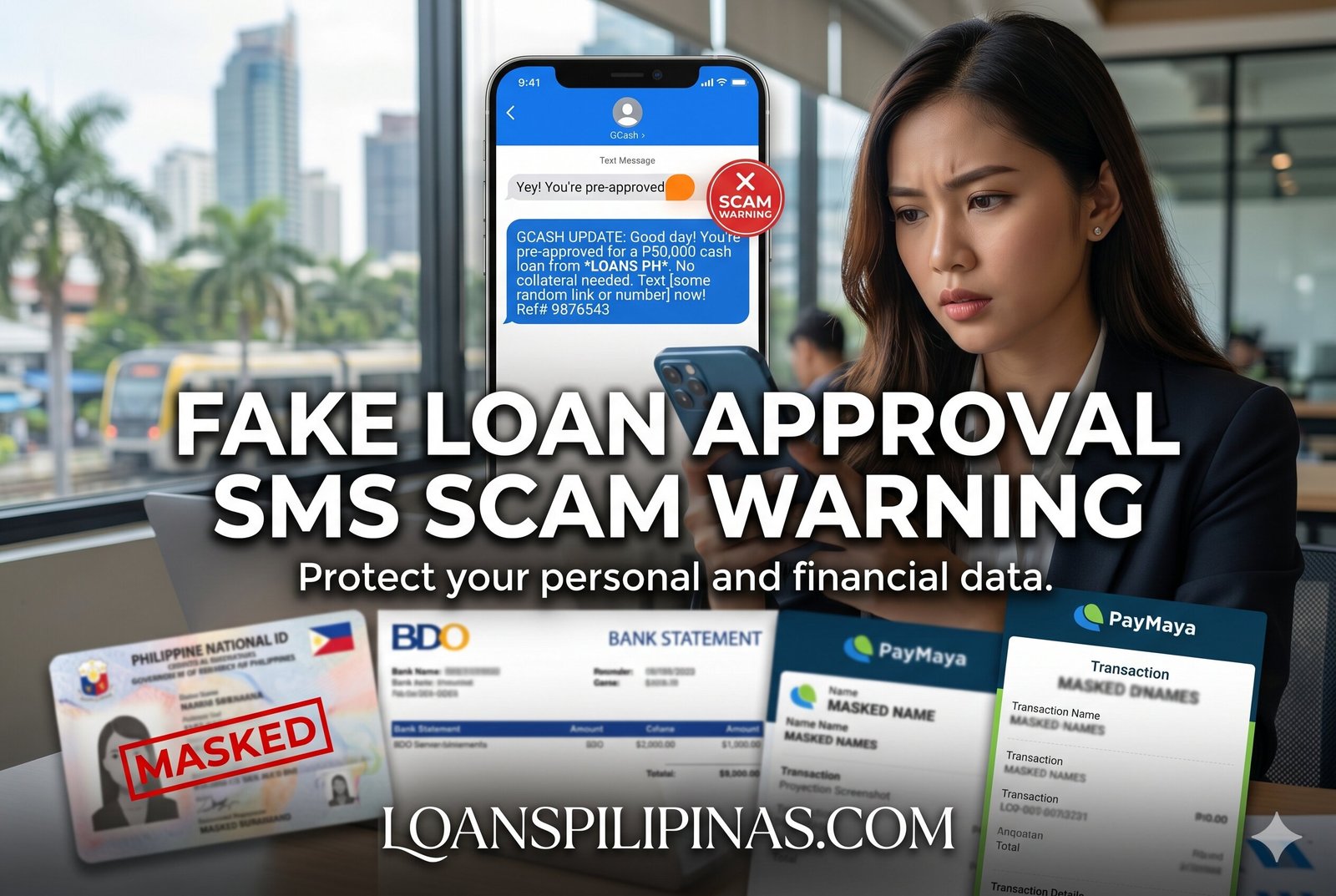
Fake Loan Approval SMS Scam Warning
Borrower Safety Checklist Before Submitting Any Loan Application
Before Installing the App
Check:
- App publisher name
- Review consistency
- Download history
- Website authenticity
- SEC-related disclosures
Avoid APK downloads from unofficial sources.
Before Uploading Documents
Verify:
- Secure connection
- Privacy policy visibility
- Customer support legitimacy
- Clear repayment explanation
Never upload IDs to suspicious chat accounts.
Before Accepting the Loan
Read:
- Total repayment amount
- Due dates
- Penalties
- Auto-debit permissions
- Data consent clauses
If repayment terms appear intentionally vague, stop the application.
What Borrowers Should Realistically Expect From Safe Digital Lending
Approval Is Never Guaranteed
Responsible lenders reject applications for reasons such as:
- Identity inconsistency
- Fraud indicators
- High existing obligations
- Suspicious device behavior
- Low repayment capacity
Rejections are part of risk management.
Verification Delays Can Protect Borrowers
Manual reviews sometimes help detect:
- Identity theft
- Fake applications
- Duplicate accounts
- Device fraud
- Deepfake verification attempts
Slower approval is not always negative.
In many cases, additional verification protects both borrowers and lenders from fraud-related losses.
Frequently Asked Questions
How can I verify if a lender is legitimate?
Check for SEC-related registration details, transparent repayment disclosures, working customer support, visible privacy policies, and consistent operational branding. Avoid lenders demanding advance release fees or refusing to explain repayment terms clearly.
Are instant loan apps safe?
Some are safe, while others may engage in abusive practices. Borrowers should examine privacy permissions, fee transparency, customer complaint patterns, and collection behavior before applying.
What are common lending scams?
Common scams include fake approval SMS messages, advance-fee fraud, cloned mobile apps, identity harvesting, and fake customer support impersonation.
Can lenders access contacts legally?
Responsible lenders should explain data access practices and obtain proper consent. Misusing borrower contacts for harassment or intimidation may create serious privacy concerns.
Why do some lenders ask for selfies and device verification?
These checks help reduce identity fraud, synthetic applications, and account takeovers. Legitimate fintech lenders commonly use digital KYC systems to validate applicants.
Practical Borrower Protection Habits That Reduce Risk
Keep Borrowing Amounts Realistic
Borrow only what can realistically be repaid on schedule.
High-risk behavior includes:
- Stacking multiple loan apps
- Borrowing to repay another loan
- Accepting unclear rollover offers
- Ignoring repayment penalties
Maintain Accurate Information
Submitting inconsistent data often causes:
- Delays
- Manual review
- Rejections
- Fraud flags
Accurate applications improve trust signals within lending systems.
Use Secure Devices and Connections
Avoid:
- Public Wi-Fi during application
- Shared devices
- Unknown APK files
- Third-party verification agents
Cybersecurity risks increasingly affect digital lending ecosystems.
Conclusion
Finding a safe instant cash loan Philippines option requires more than comparing approval speed or marketing promises. Borrowers should focus on lender legitimacy, transparent repayment practices, data privacy protections, and professional collection behavior before submitting applications.
Safe digital lending platforms usually operate with clear verification systems, lawful onboarding procedures, visible customer support, and realistic approval standards. In contrast, scam operators often rely on pressure tactics, fake approvals, hidden fees, excessive permissions, and harassment-based collections.
Careful verification, privacy awareness, and responsible borrowing habits can reduce financial stress while protecting your identity, contacts, and long-term financial stability. When urgency is high, slowing down long enough to verify the lender may be the safest financial decision you make.
